Cook Once, Eat TwiceThe Batch Cooking Method
Batch cooking is plain kitchen arithmetic: the second portion of a stew costs a few minutes of packing, not another evening at the stove. The method below covers which dishes genuinely improve when doubled, which ones resist it, how to portion, and the one decision — fridge or freezer — that determines whether the extra food actually gets eaten.
The method in one paragraph
Pick one or two dishes a week that double well. Cook them once, in a bigger pot. Portion everything on cooking day, keep in the fridge only what will be eaten within three to four days, and freeze the rest immediately — not after it has sat around. That is the whole method. Everything else in this guide is detail in service of those four sentences.
What doubles well
The pattern is moisture and time. Dishes cooked slowly in liquid reheat into themselves, and some come back better than they went in, because a night in the fridge lets the flavors settle and marry.
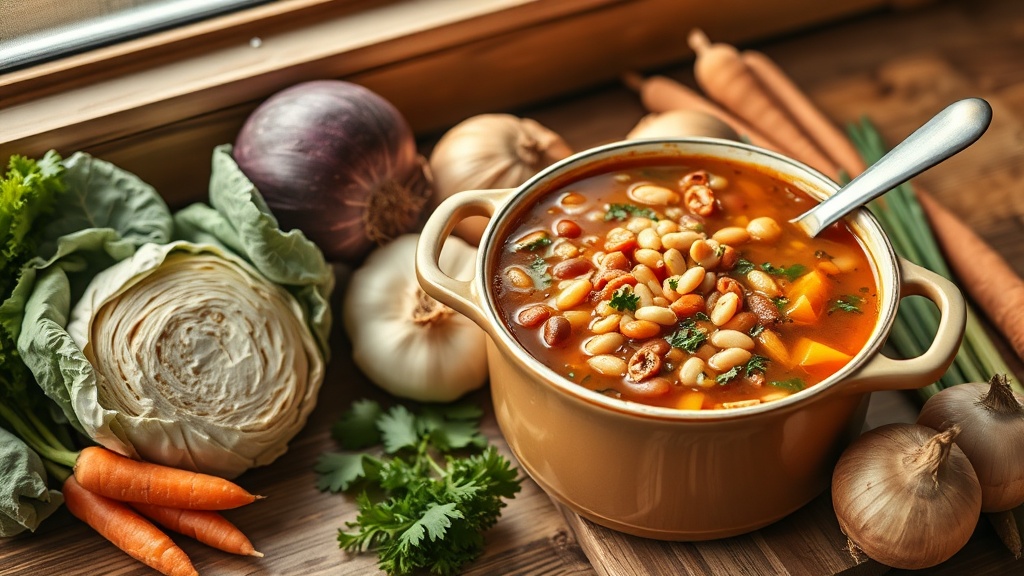
- Stews, braises, chili, and curries — the natural home of the method. Doubling adds prep time, not cooking time; the pot simmers the same either way.
- Soups, from brothy to blended. Blended soups freeze especially cleanly.
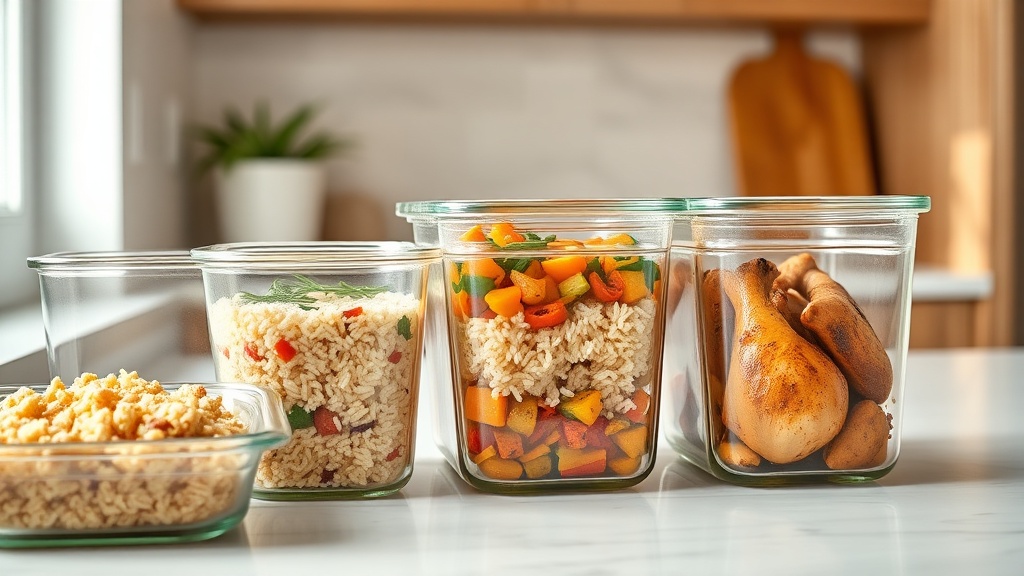
- Cooked grains: rice, quinoa, farro, barley. A pot cooked on Sunday becomes the base of lunches all week.
- Pulled and braised meats — pork shoulder, chicken thighs, a whole braised bird. Shred, moisten with the cooking liquid, and the portions stay tender through reheating.
- Beans and lentils, plain or as dal. Inexpensive to double, and they hold their shape.
- Simmered sauces, tomato sauce above all. A doubled batch is future pasta nights, shakshuka bases, and pizza toppings.
One practical note on the doubling itself: brown meat in batches rather than crowding the pan, and salt a little shy of double, adjusting at the end — the pot concentrates as it simmers.
What does not double, and what to do instead
- Crispy things. Fried food, breaded cutlets, roasted potatoes at their crispest — coating and crust go soft in the fridge and never fully return. Cook these fresh, in single-meal amounts, alongside batched sides.
- Salads. Dressed leaves wilt within hours. Batch the components instead — cooked grains, roasted vegetables, a jar of dressing — then assemble in the time it takes to open three containers.
- Cooked pasta stored in its sauce softens by the day. Batch the sauce generously; the pasta itself is ten minutes, fresh, whenever you want it.
- Delicate fish. It cooks in minutes anyway, so there is little to save. Batch the sides and cook the fillet to order.
None of these are failures of the method. They are the reason a good batch week mixes both kinds of cooking: a big pot of something wet, plus quick fresh elements around it.
Portion on cooking day
Portioning is the step that turns a pot of food into meals, and it belongs in the packing-up, not later in the week:
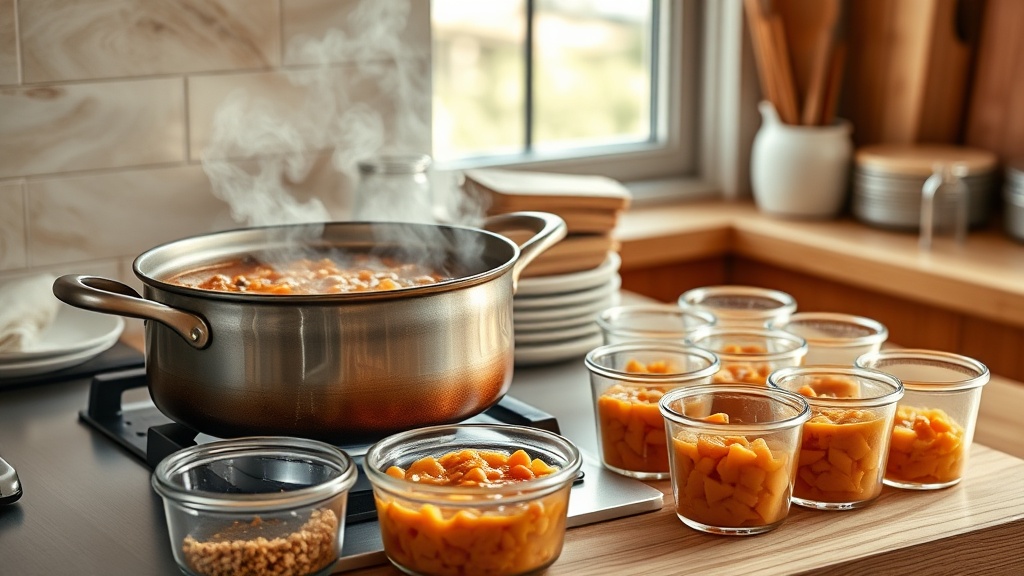
- Single-meal containers rather than one large vessel. A quart of chili is a commitment; four single portions are four separate easy decisions.
- Cool quickly in shallow layers first, then pack — into the fridge within two hours of cooking, per the standard guidance.
- For the freezer, flat bags for anything pourable. They stack, they thaw fast, and you can portion by eye.
- Label everything with the dish and the date. Freezers hold their contents beautifully and anonymously.
The fridge-versus-freezer split
Cooked dishes hold three to four days in the fridge, so the split is arithmetic, decided on cooking day: portions you will eat by day three or four stay in the fridge, and everything else goes straight to the freezer, where soups and stews keep their quality for two to three months. Freezing on day one matters — the freezer preserves food at the quality it went in, so freeze the batch at its best rather than at the end of its fridge window.
The payoff compounds. After three or four batch weeks, the freezer holds a small rotation of past cooking, and a busy evening becomes a choice between things you already made. This is the rhythm our weekly plans are built around — each week leans on one or two batch dishes, with quicker recipes arranged around them — and it works the same whether your week is keto, plant-based, or entirely unlabeled. Move tonight's portion from freezer to fridge before bed, and tomorrow's dinner is already made.